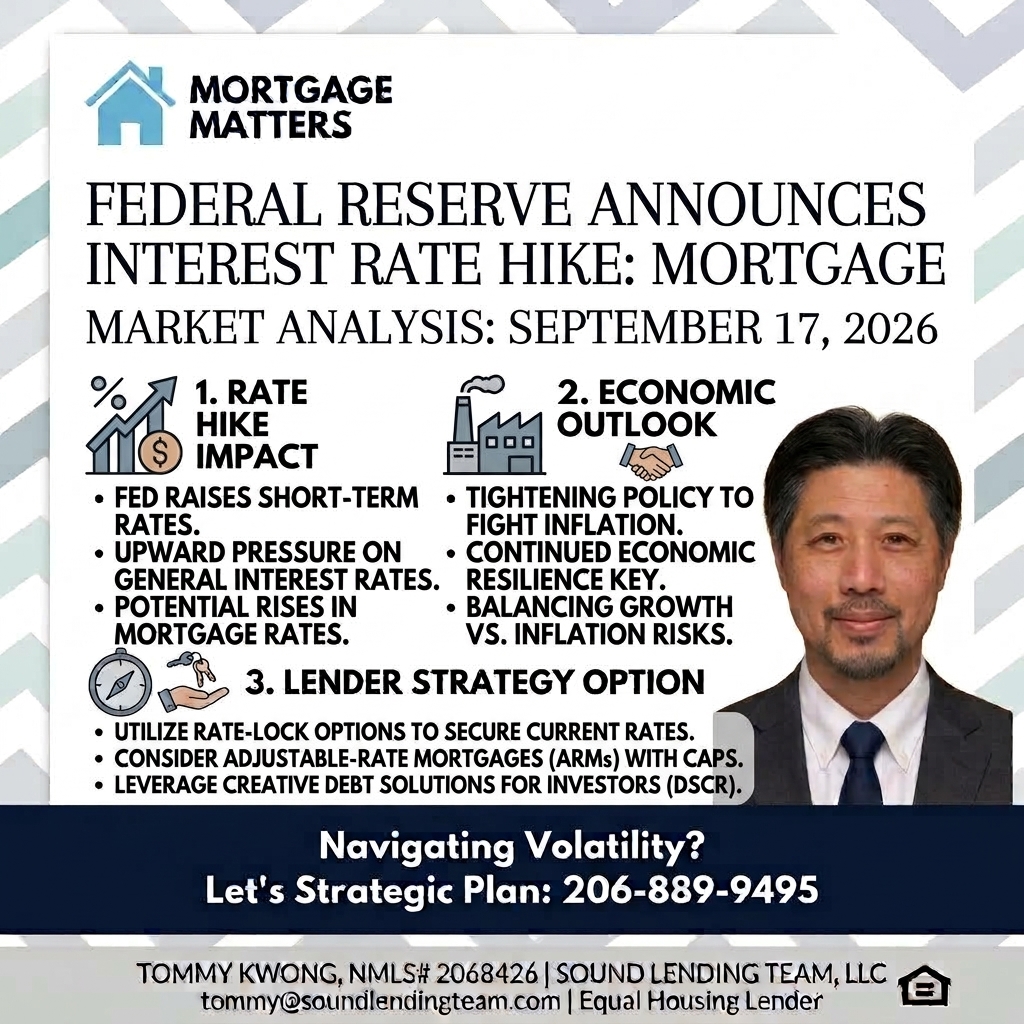
How the Fed’s September Rate Hike Impacts Mortgage Rates & the Housing Market
Following the Federal Reserve’s decision to raise the federal funds rate by 25 basis points (lifting the target range to 3.75%–4.00%), borrowers and real estate investors are asking what this means for housing costs.
- Direct Pressure on Fixed Mortgage Rates: While the Fed sets short-term policy rates rather than long-term mortgage rates directly, this decision signals that inflationary pressures remain a key concern. Benchmark 10-year Treasury yields moved higher in anticipation and response, placing upward pressure on standard 30-year fixed home loans.
- Buyer Strategy Shift: With borrowing costs remaining firm, buyers are moving away from passive “rate-watching.” Instead, success in today’s housing market centers on structured financing strategies—such as temporary rate buydowns, adjustable-rate options with rate caps, and seller-paid concessions to lower initial monthly payments.
- The Investor Playbook: Self-employed borrowers and real estate investors continue to bypass traditional debt-to-income (DTI) barriers by using non-QM financing. Products like DSCR Loans (which qualify based on property rental income rather than personal W-2s) and Bank Statement Loans remain the primary tools for maintaining leverage and expanding portfolios in a tight yield environment.
Navigating interest rate shifts requires a proactive financing plan tailored to your specific deal metrics.
Need a personalized rate strategy or cash-flow analysis for your next investment? Let’s connect!g pace? Let’s lock in your next move!
📩 Send a DM to discuss financing options
📧 Email: tommy@soundlendingteam.com
📞 Call/Text: 206-889-9495